
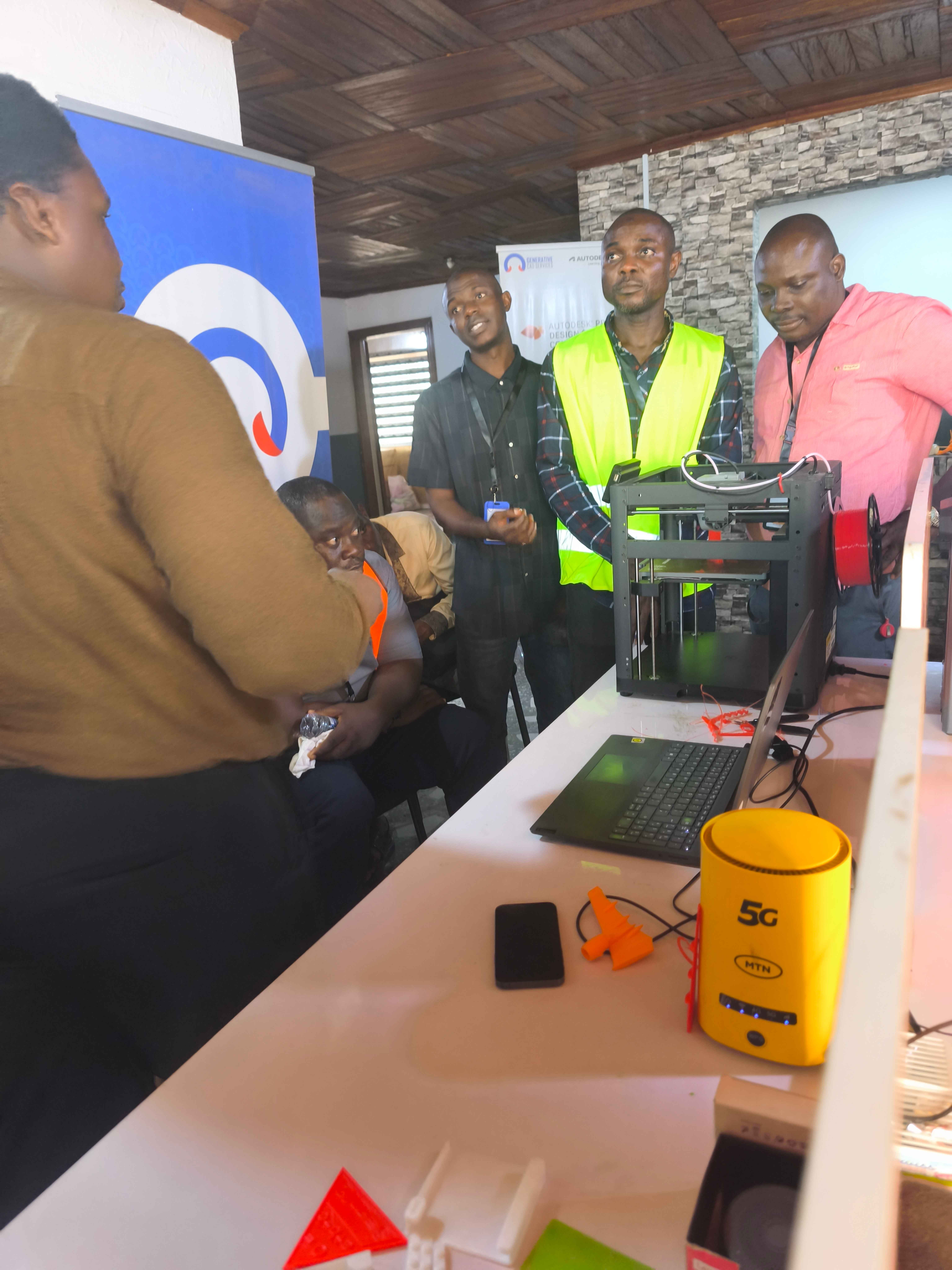
[Scene opens: A bright classroom at a Lagos technology college. The hum of a 3D printer fills the background.]
Tola (Educator): “You know, Ada, I used to think 3D printers were just for engineers or tech startups.”
Ada (STEM Student): “Same here! But now, every school in Lagos seems to be talking about them. Our design class just printed a working model turbine!”
Tola: “Exactly. It’s amazing how 3D printing in education is changing how students learn—especially in architecture, engineering, and manufacturing.”
Ada: “So, if someone asked — what’s the 3D Printer Price in Nigeria now in 2025 — what would you say?”
Tola (laughing): “Ah, that’s a big one! Let’s call the experts at Generative CAD. They’ve become Africa’s most trusted source for 3D printing solutions.”
Segment 1: The Smart Shift — How Schools Are Adopting 3D Printing
Ada: “Miss Tola, did you know the adoption of 3D printing in schools has grown over 65% in West Africa since 2022?”
Tola: “Wow! That aligns with UNESCO’s digital manufacturing research. Schools now see 3D printing as essential to STEM and CAD education.”
Ada: “Right. We’re using it in product design, physics, and even fine arts. It makes theory visual — and learning hands-on.”
Tola: “And affordable too. Before, one industrial prototype could cost ₦300,000. Now with a Flashforge Adventurer 4 from Generative CAD, we do it for less than ₦10,000!”
Ada: “That’s a huge difference. It’s no wonder schools in Abuja, Port Harcourt, and Accra Ghana are all adopting this technology.”
Segment 2: Comparing Prices — What You Get for Your Budget
Ada: “So, what’s the real 3D printer price in Nigeria this year?”
Tola: “Well, it depends on your needs. For educational use, models like the Flashforge Finder or Creality Ender 3 start from ₦250,000.”
Ada: “That’s quite accessible.”
Tola: “Exactly. For professional use — think 3D printing in manufacturing or 3D printing in engineering — prices go between ₦800,000 and ₦2 million.”
Ada: “And for industrial-scale applications?”
Tola: “You’re looking at ₦3 million and above for high-performance printers with advanced resin or metal filament capabilities.”
Ada: “So, it’s a full range — from smart and affordable to professional and premium.”
Tola: “That’s right. And Generative CAD offers flexible options — purchase, training, and after-sales support — making it top-rated in Nigeria and Ghana.”
Segment 3: Educators’ Voices — Why It Matters
Dr. James (University Lecturer, Lagos): “We integrated 3D printing into our architecture department three years ago. It changed everything.”
Interviewer: “In what way, Doctor?”
Dr. James: “Students now bring their designs to life. 3D printing in architecture lets them test structure, aesthetics, and function — all before construction.”
Interviewer: “Do you think this technology is sustainable in Nigeria?”
Dr. James: “Absolutely. Generative CAD has made it accessible. Their product development consulting and CAD courses in Lagos Nigeria bridge the knowledge gap.”
Interviewer: “So, it’s not just about machines but skills too?”
Dr. James: “Exactly. They offer digital manufacturing courses that connect 3D printing education with real industry needs.”
Segment 4: The Bigger Picture — 3D Printing Beyond Schools
Ada: “Miss Tola, I heard 3D printing isn’t just for schools anymore?”
Tola: “Correct. It’s shaping industrial production in Nigeria — from energy to electronics, even aerospace.”
Ada: “So, companies use it for product development consulting too?”
Tola: “Yes. That’s where Generative CAD stands out — they support startups and industries with end-to-end solutions.”
Ada: “So, whether it’s 3D Printing in Abuja or 3D Printing in Accra Ghana, they’ve got it covered.”
Tola: “Exactly. Their expertise spans 3D Printing Services & Supplies in Ghana & Nigeria, helping businesses move from idea to prototype faster.”
Segment 5: What the Data Says
Ada: “Do you have stats on how 3D printing in education is growing?”
Tola: “Yes. According to a 2025 West African Tech Report:
- Over 70% of private schools plan to add 3D printers for schools by 2026.
- 60% of engineering departments already use them in capstone projects.
- And demand for best 3D printers for schools has tripled since 2023.”
Ada: “That’s impressive! So it’s not a trend — it’s the future.”
Segment 6: Where to Buy — Certified Dealers in Nigeria
Tola: “If someone’s looking to buy today, where should they go?”
Ada: “Simple — Generative CAD. They’re certified partners for Flashforge, Creality, and Anycubic brands.”
Tola: “And they don’t just sell — they train educators and students too.”
Ada: “Right! Plus, their customer service is known to be industry-leading. You can visit their Lagos office or shop online.”
Segment 7: The Conversation That Matters — Future of Learning
Tola: “You see, Ada, the real power of 3D printing in education is creativity.”
Ada: “Yes, and the use of 3D printing in education prepares us for jobs that don’t even exist yet.”
Tola: “Exactly. That’s why schools must adopt 3D printers for educational use. It bridges innovation and skill development.”
Ada: “And with partners like Generative CAD, students can explore ideas without limits.”

 Search