
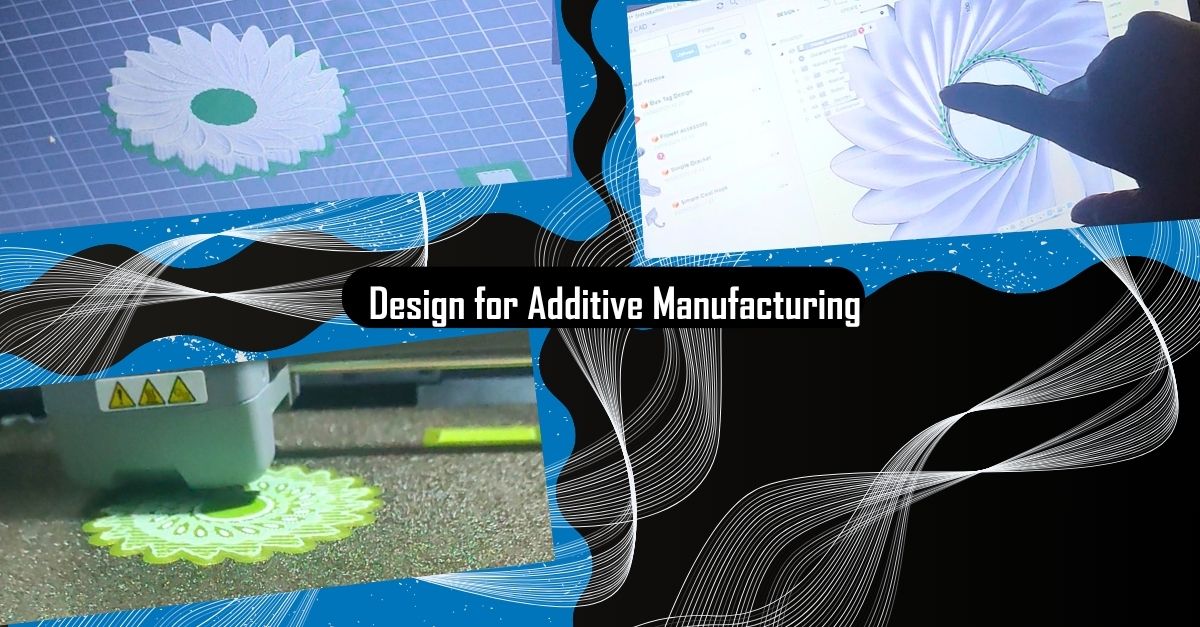
To unlock the true potential of 3D printing, you cannot simply take a part designed for a CNC machine and send it to a 3D printer. You must change the way you think about design entirely. This methodology is known as Design for Additive Manufacturing (DfAM).
Defining DfAM
Design for Additive Manufacturing (DfAM) is the practice of designing, optimizing, and adapting a digital CAD model specifically for the 3D printing process.Unlike traditional methods that cut material away from a solid block, additive manufacturing builds parts layer by layer. This fundamental difference means that the geometric limitations of the past no longer apply. DfAM empowers engineers to create highly complex, organic, and lightweight structures that would be physically impossible or prohibitively expensive to manufacture using conventional techniques.
The Core Principles of DfAM
Successfully implementing DfAM requires understanding several key principles to ensure your parts print successfully and perform optimally.1. Part Consolidation
In traditional manufacturing, complex products are broken down into multiple simpler parts that must be assembled with screws, welds, or adhesives. DfAM allows you to consolidate these assemblies into a single, complex 3D-printed part. This drastically reduces inventory overhead, eliminates assembly time, and removes potential points of failure at the joints.2. Lightweighting and Topology Optimization
Why use solid blocks of material when you don't have to? DfAM utilizes advanced software algorithms (often called Generative Design) to analyze where stress is applied to a part. The software mathematically removes unnecessary material, resulting in an organic, lattice-like structure that maintains the exact same strength as a solid block but weighs significantly less. This is highly sought after in the aerospace and automotive industries.3. Designing for the Printing Process
While 3D printing offers immense freedom, it is still bound by physics. Proper DfAM requires designing with the specific printing technology in mind:- Minimizing Overhangs: Designing angles that self-support (typically less than 45 degrees) to reduce or eliminate the need for printed support structures, saving both time and material.
- Understanding Anisotropy: FDM printed parts are generally weaker along the Z-axis (where the layers bond). DfAM involves orienting the part in the CAD software so that the mechanical stress runs parallel to the layer lines.
If you are new to the materials used in these processes, understanding how different plastics behave during printing is crucial. Review our Filament Guide for Beginners: PLA vs ABS vs PETG Explained to ensure your design matches the capabilities of your chosen material.
Master DfAM and Elevate Your Career
Transitioning from traditional design thinking to DfAM requires structured education. Attempting to figure out overhangs, lattice structures, and part orientation through trial and error can lead to costly failed prints and wasted material.If you want to master the art of designing specifically for 3D printing, we invite you to enroll in our specialized CAD curriculum. You can learn these advanced techniques through our Professional 3D CAD and DfAM Training at Generative CAD Academy.
Join an exclusive Webinar designed for aspiring engineers, product designers, innovators, and technology enthusiasts looking to build industry-relevant skills in Product Design, Development, CAD workflows, and Design for Additive Manufacturing (DfAM).
Learn how modern engineering teams use digital product development and additive manufacturing to create innovative products for the future.
This free webinar session will also provide insights into the upcoming Cohort 2 training program by GCAD Academy, sign up here.
Remember Design for Additive Manufacturing is not just a buzzword; it is a critical engineering skill for the future. By embracing part consolidation, topology optimization, and process-specific design rules, businesses can reduce material costs, drastically cut lead times, and create superior products that defy the limitations of traditional manufacturing.
You can visit us at: 26, Akinwale Street, Off Yaya Abatan Road, Ogba, 100218, Lagos, Nigeria.
Send us an Email at: info@generativecad.com | Call/WhatsApp: +234 703 324 8607

 Search